Explore the design-risk workflow
See the workflow Simply Sigma is designed around: requirements give DFMEA its context and feed verification directly, while DFMEA findings inform additional tests and conditions. A product walkthrough will confirm what is available today for your team's work.
The connected workflow
- RequirementsWhat the product must do
- Context for risk analysis , leads to DFMEA
- Requirement-driven verification , leads to DVP&R (directly, not via DFMEA)
- DFMEAHow the design could fail
- Additional tests and conditions , leads to DVP&R
- DVP&RHow the design will be verified
- Results for engineering review , leads to Evidence & review
- Evidence & reviewWhat the results mean for the design
Workflow illustration · Intended connected experience
Requirements provide the context for DFMEA and feed the DVP&R directly. DFMEA findings also inform tests and conditions in the DVP&R. Verification results provide evidence for engineering review.
The three artifacts in the product
These views show how requirements, DFMEA and DVP&R are laid out today, using example project data. A walkthrough will confirm what is available for your team's own work.
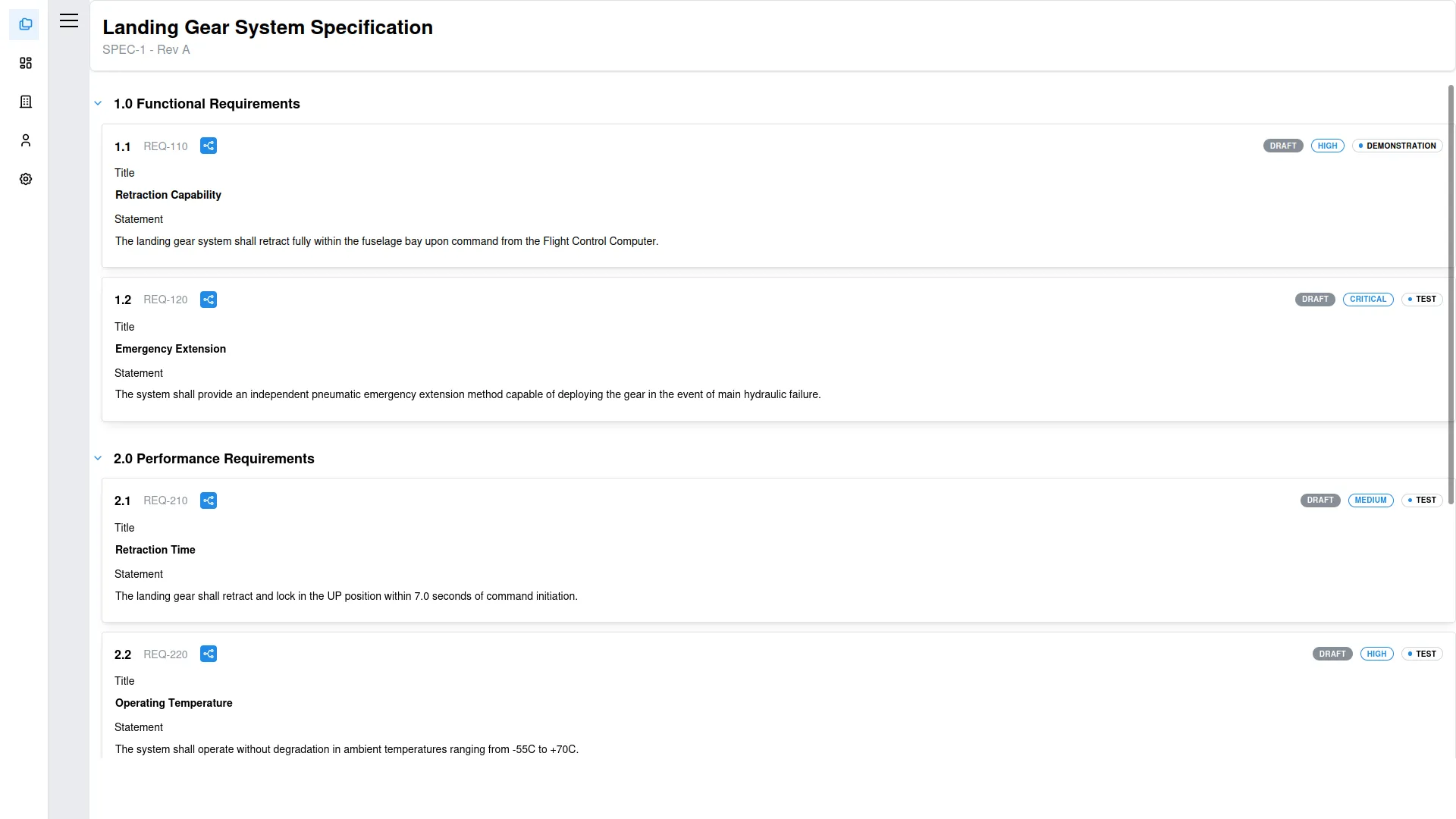
Requirements
A requirement specification grouped into sections, with each requirement carrying an identifier, a statement, and priority, status and verification-method labels.
Product view: requirements Example project data.
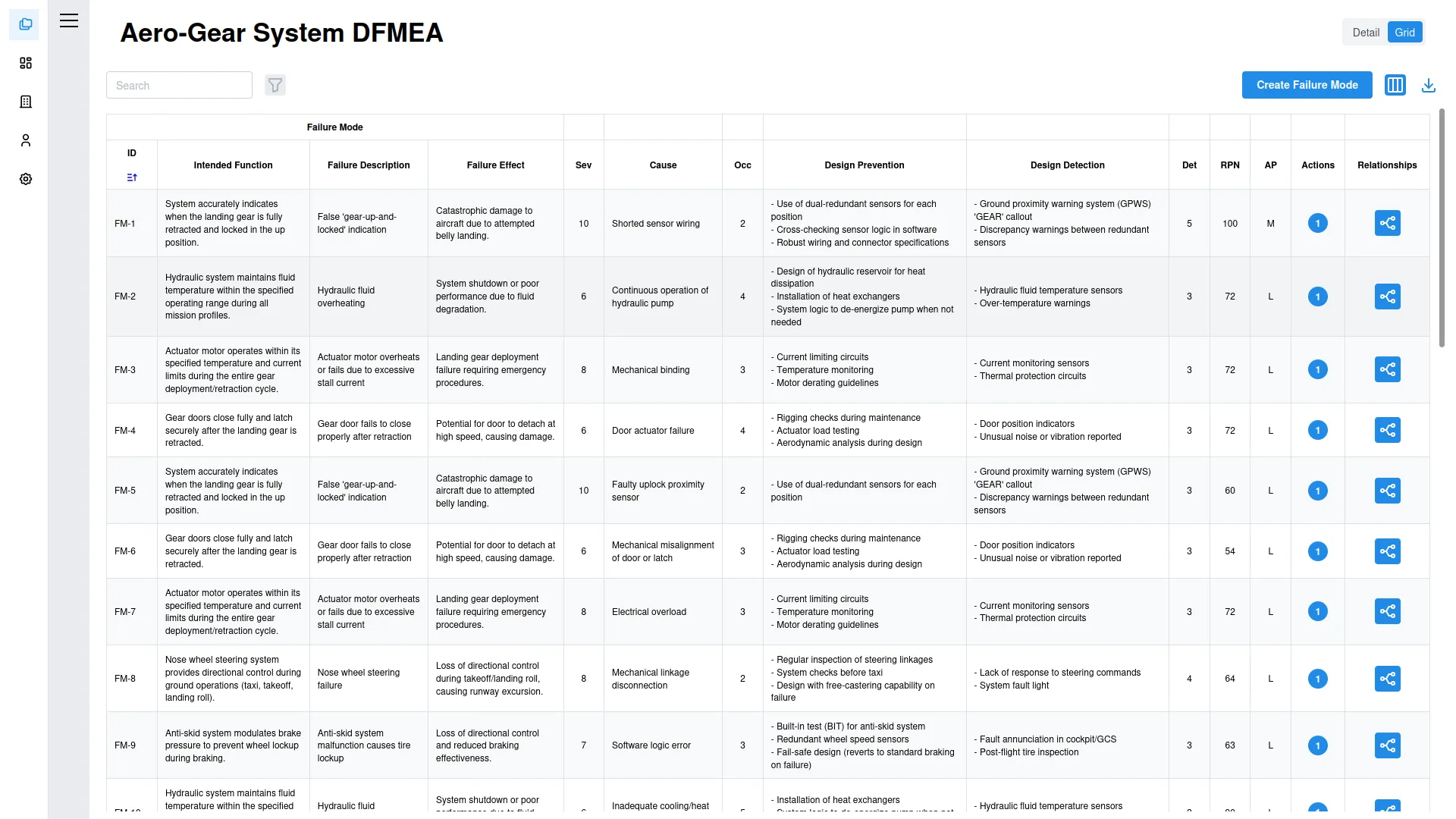
DFMEA
A DFMEA grid listing failure modes with their intended function, failure effects and causes, the team's severity, occurrence and detection ratings, the resulting RPN and action priority, and links to related records.
Product view: DFMEA Example project data.
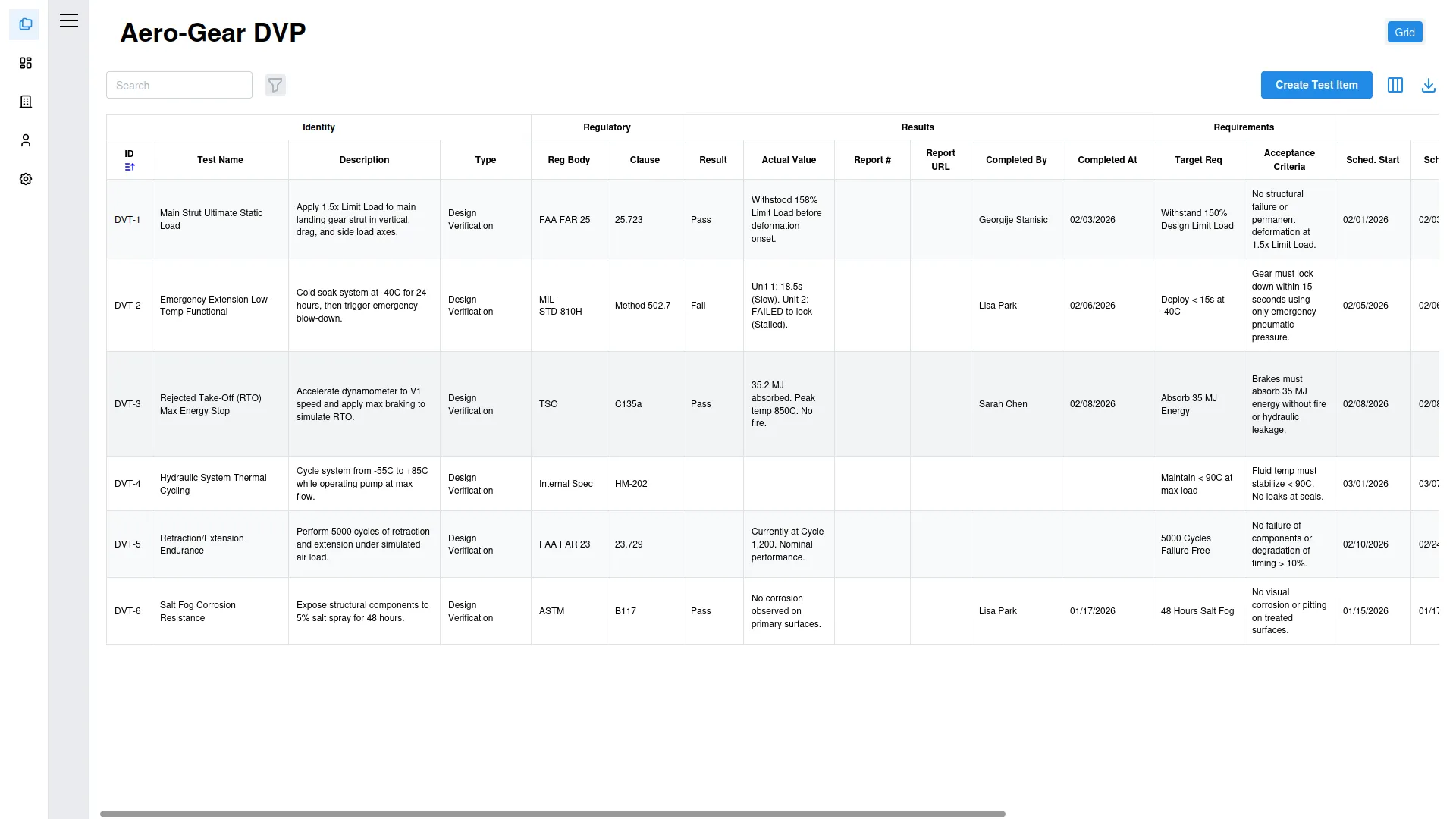
DVP&R
A verification plan and report grid listing test records with their description and type, referenced regulatory body and clause, result and actual value, the requirement each test targets, and its acceptance criteria and schedule.
Product view: DVP&R Example project data.
Bring one design problem to a walkthrough.
Choose a product or subsystem where your team needs to build a DFMEA and verification plan. We can walk through the available product against that work and agree what a useful pilot would need to prove.
Arrange a product walkthroughPilot-stage product. This website describes the intended connected workflow. Available functionality and any work needed for your pilot will be confirmed in the walkthrough.